Download app Vacancies Nederlands English
Menu
Close

Four New Grants for Early Detection Research

Four research teams from the NKI Center for Early Diagnostics have been awarded funding for new projects to improve the early detection of cancer. These initiatives are made possible by financial support from KWF Dutch Cancer Society and donations from the DNA Gala. The studies are expected to boost efforts in early cancer detection significantly.

New Research Projects

The following projects can get started:

Smart biopsy needle
The research group led by surgeon Theo Ruers is working on the development of a “smart” biopsy needle. This advanced needle incorporates complex technology that can immediately determine whether there are malignant cells present in the tissue after sampling. This would provide patients with instant results, reducing anxiety and minimizing the need for additional biopsies.

Hyperspectral imaging
Senior researcher Behdad Dasht Bozorg is working on an innovative device for the early diagnostics of skin cancer. This device combines artificial intelligence with hyperspectral imaging. The specialized technique enables the detection of skin cancer without the need for unnecessary tissue sampling. The tool is expected to become suitable for home use via mobile phones.

Risk model with point-of-care ultrasound
Urologist Pim van Leeuwen is leading a study to improve risk assessment for prostate cancer using a Point-of-Care Ultrasound device. This specialized ultrasound tool provides imaging of the prostate, while collecting valuable information to assess prostate cancer risk. The goal is to implement this risk assessment method in general practice.

Early detection of colorectal cancer: FIT implementation study
Gastroenterologist Monique van Leerdam is heading the FIT implementation study. In the Netherlands, the fecal immunochemical test (FIT) is used in colorectal cancer screening, with a high cut-off threshold. England uses FIT with a lower cut-off threshold as a triage tool in general practice as well. This study will evaluate the use of FIT with a lower cut-off threshold in general practice and assess its outcomes.

The impact of early detection

The NKI Center for Early Diagnostics aims to facilitate and promote the development and implementation of new tests and methods in early diagnostics. In addition, the center focuses on better identifying individuals at higher risk for cancer, allowing for more efficient testing strategies. By advancing research into innovative diagnostic tests and targeting high-risk groups, the Center aims to make a significant impact in cancer detection.
News

All news

One year of the prostate consultation: promising results in early detection of prostate cancer

The initial results after one year of the Prostate Consultation, a collaboration between the NKI Center for Early Diagnostics and SALT, are promising. These results show that the Prostate Consultation is a valuable addition to primary care and that early detection can be implemented safely and efficiently.

Prostate cancer awareness month: know your risk

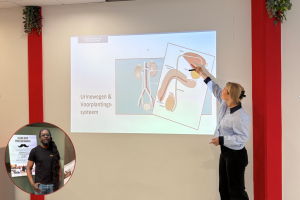
Did you know that men of Surinamese, Caribbean, and African ancestry have a higher risk of developing prostate cancer? And that the disease often develops more aggressively in these men? This makes early detection vital, even before symptoms occur.

Improving prostate cancer risk assessment using abdominal ultrasound

Over the past year, researchers at the NKI Center for Early Diagnostics have been investigating a new, more patient-friendly method to assess the risk of prostate cancer in men with elevated PSA levels. The first promising results of this study were recently published in the scientific journal The Prostate.

Establishment of the Barrett coordination center

The NKI Center for Early Diagnostics and the Dutch Barrett’s Registry Foundation (NBRS) are joining forces to establish the Barrett coordination center to further improve care for patients with Barrett’s esophagus.

NKI expands its collaboration with Andros Clinics

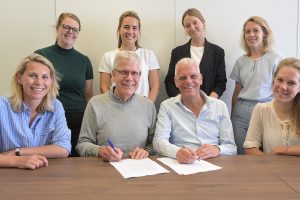
The Netherlands Cancer Institute and Andros Clinics are intensifying their collaboration to help men with an increased risk of prostate cancer more quickly and effectively. Together, we ensure that every man is directed to the place that best matches his situation as quickly as possible. This not only improves the quality of care but also ensures that patients receive help faster.

Jelle Wesseling appointed medical director of the NKI Center for Early Diagnostics

Jelle Wesseling has been appointed Medical Director of the NKI Center for Early Diagnostics (CVV) as of July 1, 2025. He will succeed Theo Ruers, who has held the position since January 2022.

Skin cancer awareness at Stichting Gouden Handen

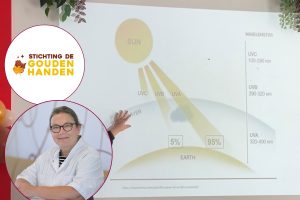
Dermatologist Dr. Nicole Kukutsch from the NKI Center for Early Diagnostics has recently provided an inspiring lecture on skin cancer in the southeast region of Amsterdam. This lecture las been organized by Stichting De Gouden Handen, a foundation dedicated to opening up conversation on cancer within multicultural communities. A valuable initiative that we wholeheartedly support.

Prostate cancer is now the most common cancer type among men

Prostate cancer is now the most common form of cancer among men. Recent figures from the IKNL show that the disease is diagnosed almost as often as breast cancer, with over 15,000 new cases in the Netherlands in 2024. The number of men with prostate cancer is expected to increase further in the coming decades, mainly due to the aging population.

Four New Grants for Early Detection Research

Four research teams from the NKI Center for Early Diagnostics have been awarded funding for new projects to improve the early detection of cancer. These initiatives are made possible by financial support from the Dutch Cancer Society (KWF Kankerbestrijding) and donations from the DNA Benefit Gala. The studies are expected to significantly boost efforts in early cancer detection.